Accounting
Accounting has two layers: full accounting on the Uniform Chart of Accounts, and a simple pre-accounting module for smaller businesses. Folio and sales events turn into entries; the books cannot be altered and periods are locked.
Uniform Accounting
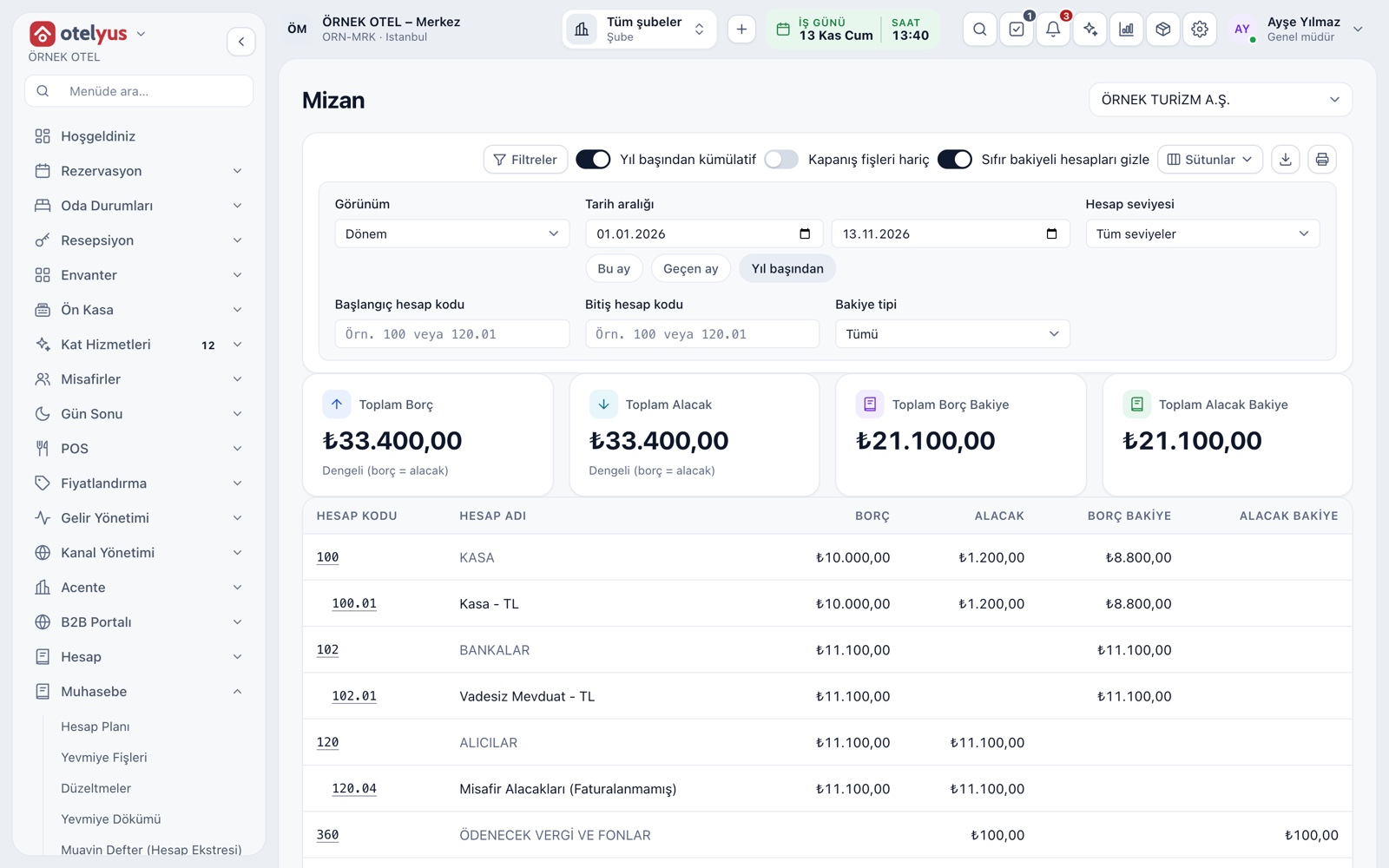
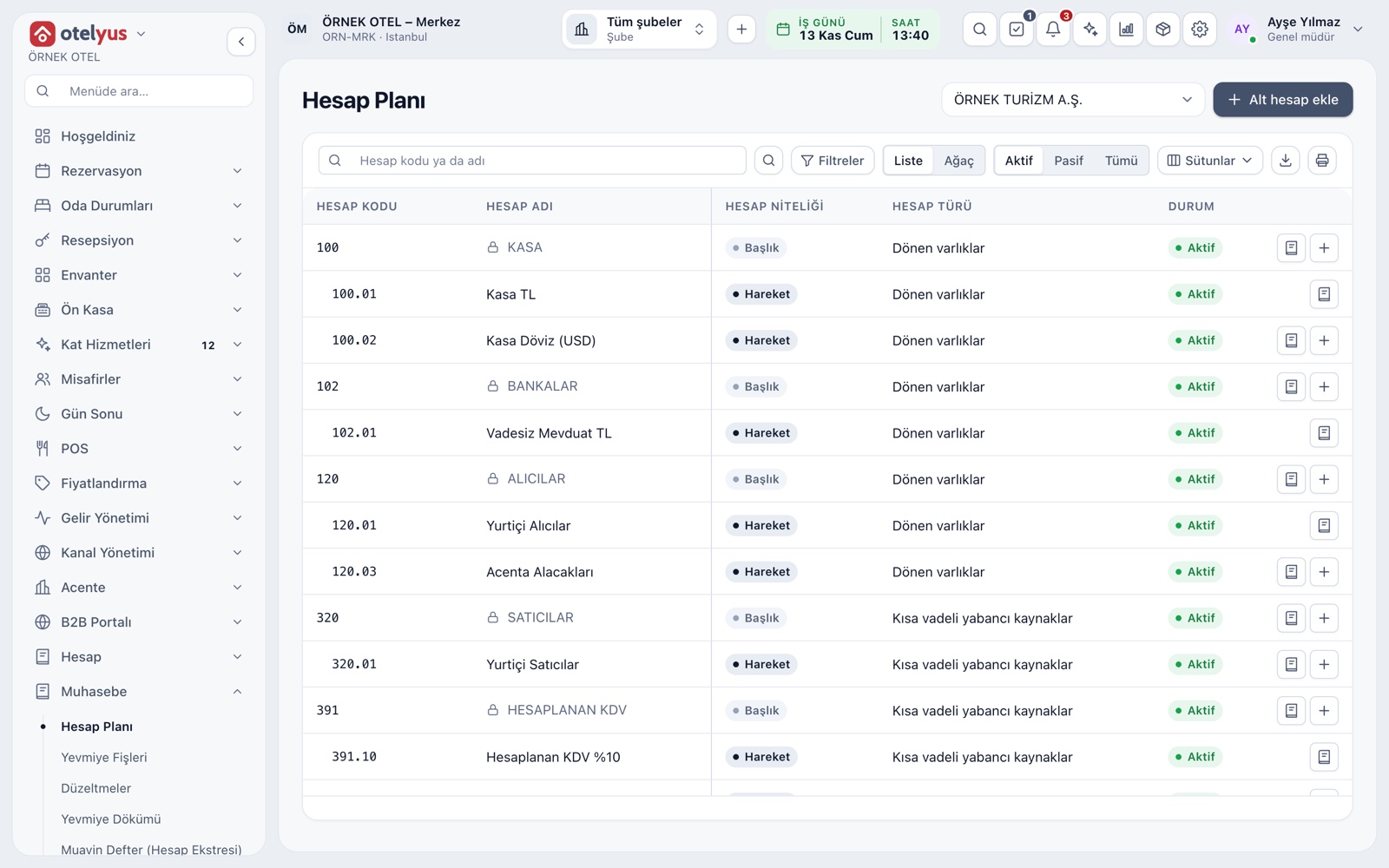
On the Uniform Chart of Accounts, the books, journal, general ledger, trial balance, balance sheet and income statement are kept per legal entity. No entry can be saved unless debits equal credits. Reports are produced straight from the books; the trial balance can be taken by period, cumulative or monthly, and passed to your accountant.
- The trial balance summary card shows whether totals balance.
- Each report header states who prepared it, the date and the filters.
- A posted entry is never deleted; corrections use a reversing entry.
Pre-Accounting: Simple Screens
Pre-accounting is for businesses that want to track income and expenses, accounts and cash and bank with simple screens, and it also covers cheques and notes, fixed assets, loans and quotes. The two accounting modules never interfere, and the Uniform Chart of Accounts is never altered. The accounting system is chosen once at setup.
- The choice is asked only if both modules are included.
- Accounting and accounts are shared by all of your activities.
- Accounting can also be used on its own.
Opening the Books
When you open the books, the Uniform Chart of Accounts and the hotel template's sub-accounts are loaded, and the first fiscal year's 12 periods are created open. The expense profile is chosen as 7/A or 7/B and cannot change after the first entry; please consult your accountant when choosing.
- In a business with several legal entities, each taxpayer's books are separate.
- Main account names are locked; only sub-accounts are added.
- Opening the books is a separate permission.
Automatic Entries from Folios and Sales
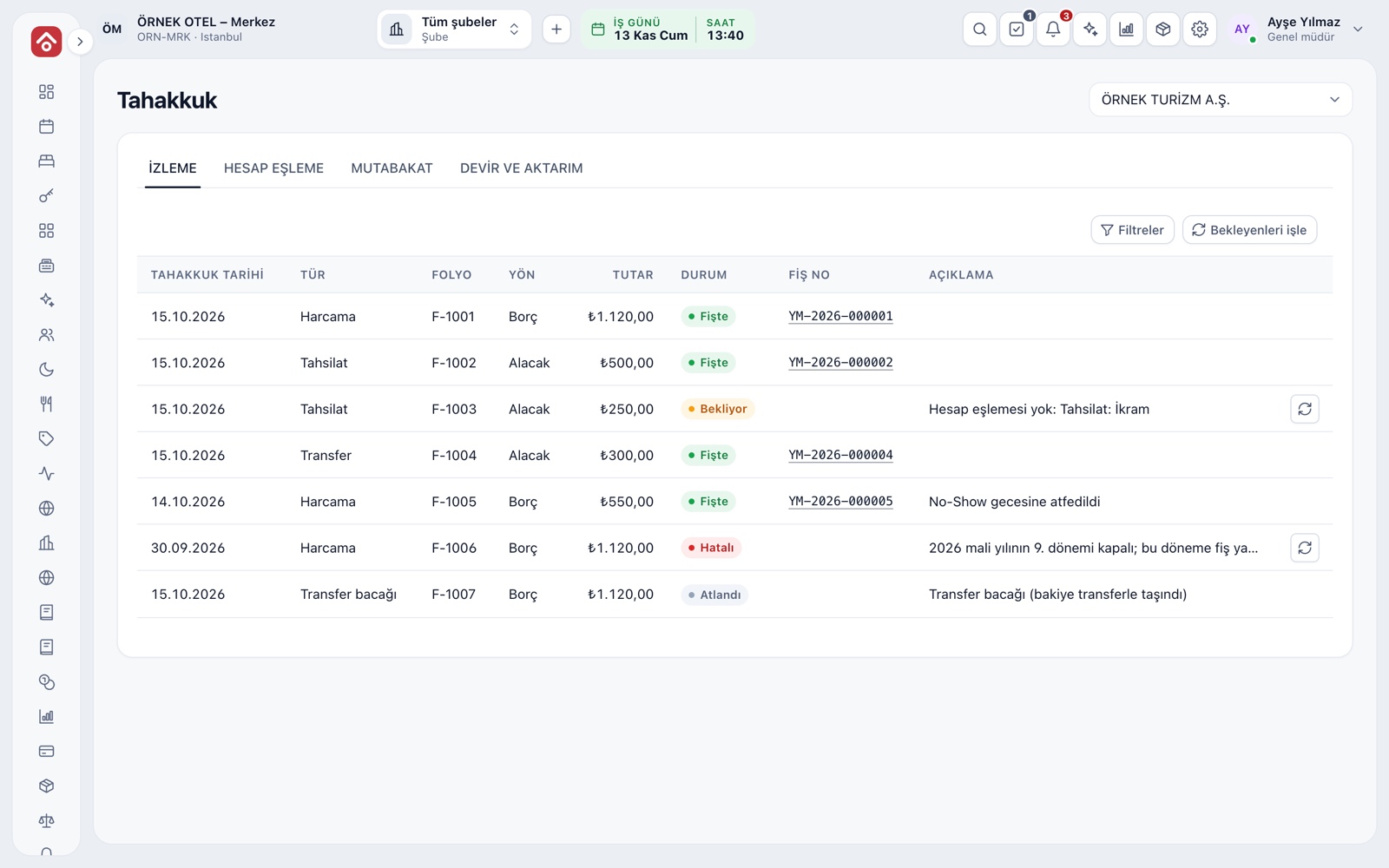
Room nights, charges, payments, transfers and reversals on a folio turn into journal entries. Which event posts to which account is defined in the account mapping; an event with a missing mapping does not fail, but waits with its reason and is processed once the mapping is complete.
- The tracking tab shows each record as Posted, Waiting, Failed or Skipped.
- The reconciliation tab compares control accounts with open folio balances.
- POS payment types and purchase invoices use the same mapping.
Fixed Assets, Depreciation and Revaluation
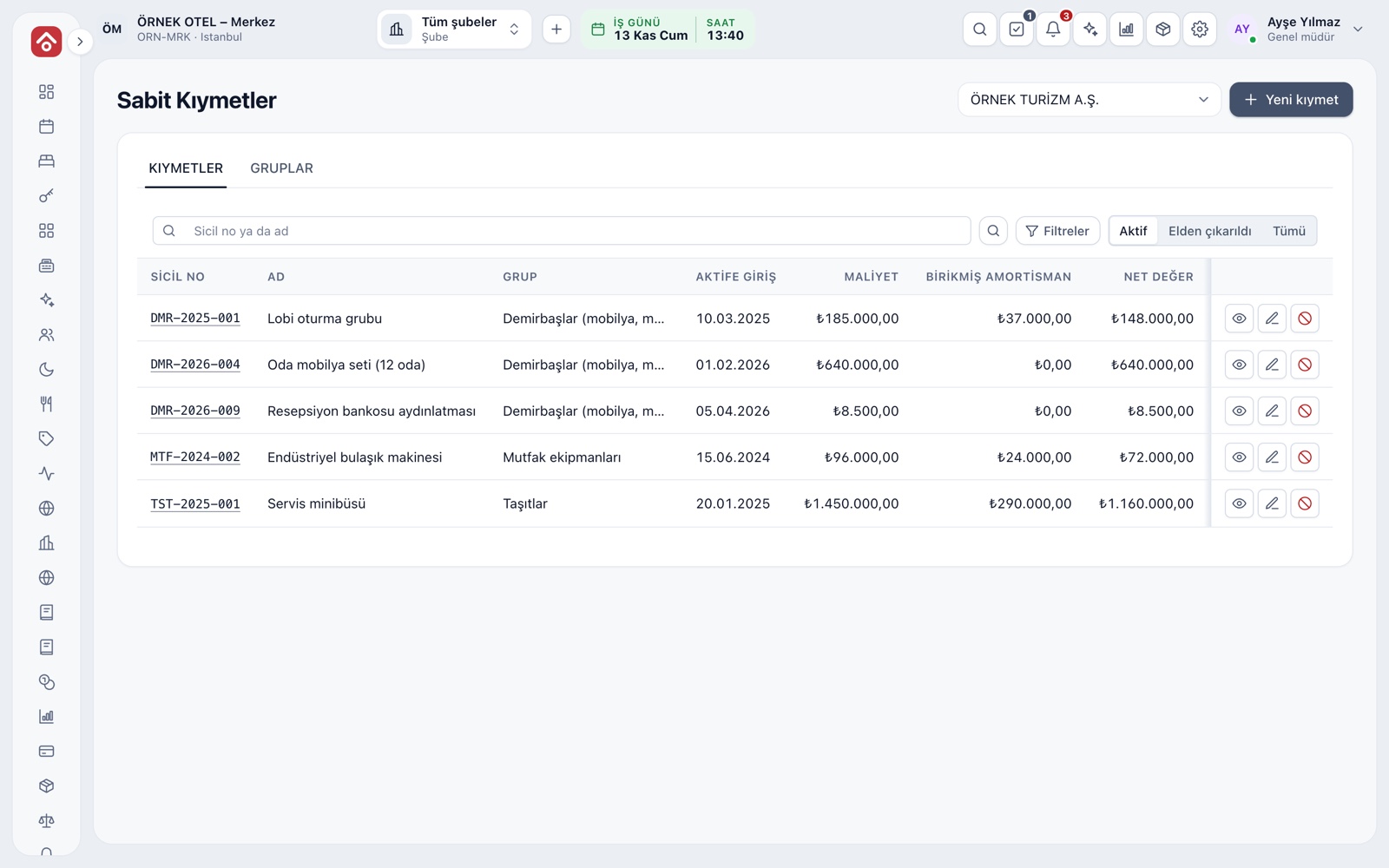
Fixed asset cards build a depreciation plan by group, method and life, and depreciation entries are posted to the books. Foreign-currency balances are updated at period end with a revaluation entry, and a preview comes first.
- Once depreciation is booked, an asset's group, date, cost and life cannot change.
- Revaluation runs are tracked in the history.
VAT, Period End and Filing Support
Tax rates are kept with effective dates, and each entry and invoice line is stored with the rate on its transaction date. Output, input and carried-over VAT from the books become the return summary. The period-end page brings together the close checklist, VAT set-off and year-end closing. Returns are not filed from this system; please confirm rates with your accountant.
- The accommodation tax summary is prepared per property.
- A period cannot be closed until the required steps are done.
- No entries can be posted to a closed or locked period.
Modules used together
Chart of Accounts and Groups
Chart of accounts, account groups and account types
Learn moreJournal Entries and Corrections
Journal entry, corrections and voucher review
Learn moreTrial Balance and Financial Reports
Trial balance, balance sheet and income statement
Learn moreFiscal Years and Periods
Open, close and lock periods
Learn moreTax, Withholding and Exemption Codes
VAT and accommodation tax rates are kept with their effective dates, and every line stores the rate of its transaction date. Withholding and exemption codes are checked on the invoice before it is issued. Confirm rates and dates with your accountant.
Learn moreFrequently Asked Questions
What is the difference between pre-accounting and uniform accounting?
Uniform accounting keeps entries, trial balance and balance sheet on the Uniform Chart of Accounts. Pre-accounting is for businesses that want to track income and expenses, accounts and cash and bank with simple screens.
Who decides which accounting system I use?
You do; the choice is made once at setup. If both modules are included in your plan you are asked to choose, and a business with a single module is not asked.
Can I use accounting in a business that is not a hotel?
Yes. Accounting and accounts are shared modules; it does not matter whether you run a restaurant, an event venue or a hotel, and the module also works on its own.
Can I delete an entry I posted wrongly?
No. A posted entry is never deleted; a reversing entry is posted and, if needed, a new one opened. A reversal requires a reason and is written to the audit trail.
Does the system file the tax returns?
No. Filing support summaries are prepared, but returns are not submitted from this system.
Meet Accounting
Let us call you for a live walkthrough, or try it free for 1 month.