For a couple, choosing a venue combines one of the biggest expenses of their lives with an emotional decision. In that process they get to know your communication before they get to know the venue itself: how quickly you answered the phone, whether you called when you said you would, whether you were ready for their questions on the tour. Below you will find a communication timeline that shows what to say to the couple and when, from the first inquiry to the wedding day, with practical tips for each stage.
The first inquiry: listen first, then quote
On the first call or message, do not rush to give a price; ask a few questions first:
- Which date are they considering, and do they have flexible alternatives?
- How many guests do they expect, and what kind of event is it (wedding, engagement, henna night)?
- What is the budget range and priority? Price, location or food?
- Are they looking at other venues? Who takes part in the decision?
Record the answers: name, phone, date, guest count, the price quoted and the follow-up date. The complaint couples raise most often is being told "we will get back to you" and never hearing back. Promise a date and call on that day. For the hours you cannot pick up, an automatic reply with your opening hours beats an unanswered call. Set a same-day callback rule for every missed call; most couples write to several venues on the same day, and a fast reply makes a difference.
The venue tour: receive them prepared
The tour is the moment the couple sees the venue for the first time. Small details leave a big impression:
- If possible, schedule the visit close to the hour of the actual event; in evening light the venue shows its real self.
- Have the venue clean, ventilated and lit; set an example table layout instead of showing an empty room.
- Plan the route in advance: reception, parking or valet, entrance, hall, preparation area, restrooms, service entrance.
- Have menus and packages ready in writing; if you can offer a sample tasting, add it to the appointment.
- Notice who actually makes the decision; if the family came together, make time for everyone's questions.
- End the tour with a suggested next step: placing a hold on the date, a second visit or a written quote.
Within 24 hours of the tour, send a short written summary: the date discussed, the price, the scope and any open questions.
Manage the decision process
A couple may take days to decide, and you manage that time:
- When you offer a hold, state the expiry date in writing and remind them before it ends.
- If they have not decided, do not push, but be honest that the date is in demand.
- If the couple chose another venue, ask politely why: price, date, location, a family decision? Record each answer; the reasons for lost customers should feed your pricing and marketing decisions.
Communication timeline
| Stage | Message | Channel | Purpose |
|---|---|---|---|
| Day of the inquiry | Thanks and quote summary | Message or email | Being remembered |
| After the tour, within 24 hours | Summary and open questions | Message | Easing the decision |
| Before a hold expires | Reminder of time left | SMS or call | Avoiding a surprise lapse |
| On confirmation | Confirmation, payment plan, one point of contact | SMS and email | Building trust |
| After every payment | Receipt and remaining balance | SMS | Transparency |
| As a due date nears | Reminder | SMS or call | Preventing late payment |
| Weeks before the event | Guest count, menu and program confirmation | Conversation | Final details |
| The week before the event | Address, parking, program flow, contact | Linked information note | Calming the day |
| After the event | Thanks and a request for feedback | Message | Good reviews, referrals |
The tone of your messages
Messages should be short, personal and single-purpose. Address the couple by name and ask one question per message. Do not send messages late at night or very early in the morning. Do not put personal details (ID numbers, address specifics) in messages; collect only the personal data you actually need, and manage consent according to current legislation. Ask your legal adviser for details.
Two sample sentences are enough to show the tone. After a tour: "Hello, thank you for visiting our venue today. Our quote for the date we discussed is attached and is valid until the date shown. You can reach us on this number with any questions." A hold reminder: "Hello, the hold on your date ends tomorrow. If you would like to talk it over, we can call you today."
Supporting it with software
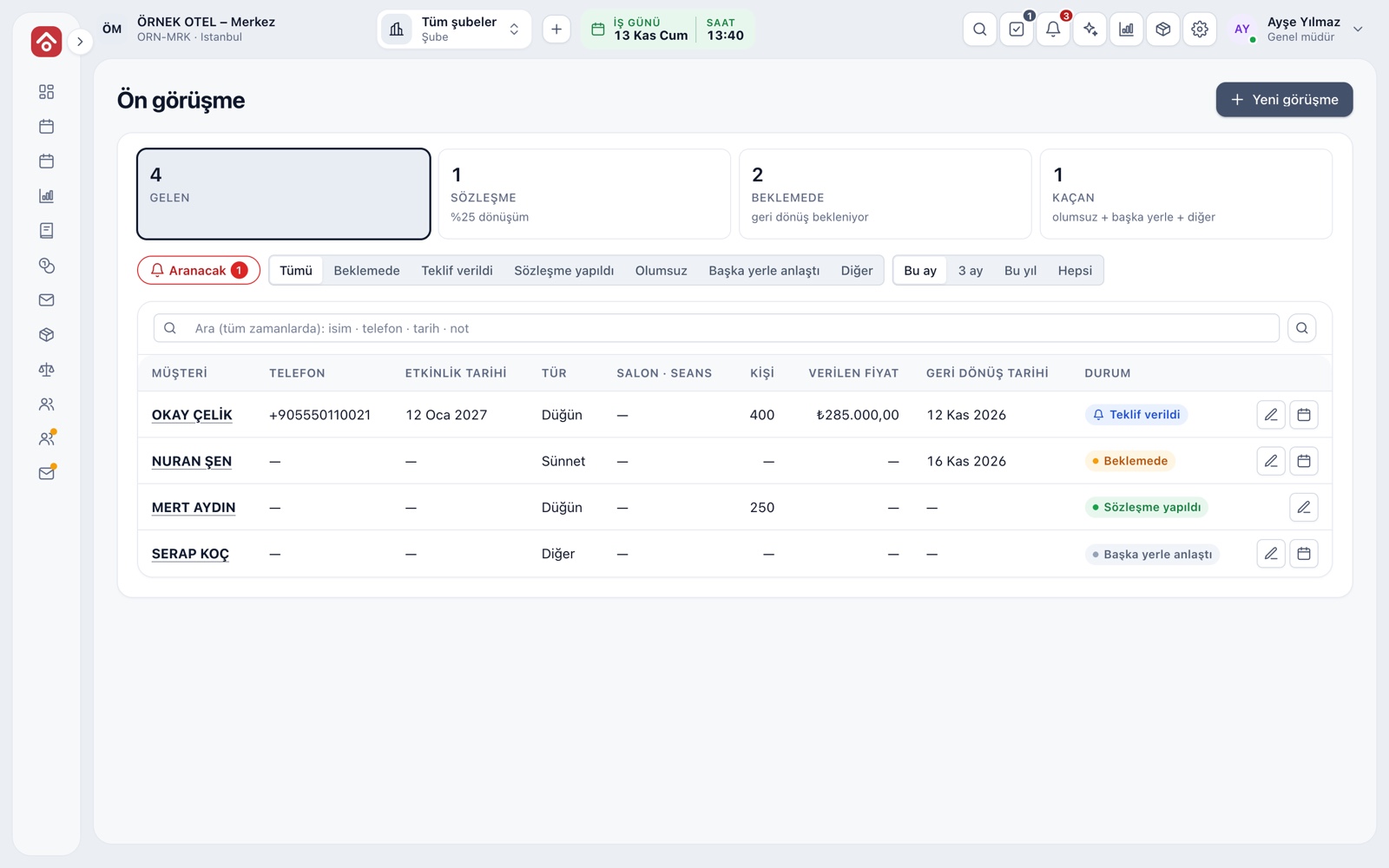
In weddyus, much of this flow is recorded. The inquiry screen holds name, phone, venue, event date, the price quoted and a follow-up date; the follow-up date defaults to three days ahead, and inquiries that come due are counted and can be filtered under a "To call" chip. The statuses are Waiting, Quoted, Contract signed, Negative, Went to another venue and Other. Cards at the top show incoming, converted, waiting and lost inquiries along with the conversion percentage, and "Convert to booking" carries the details into the booking form.
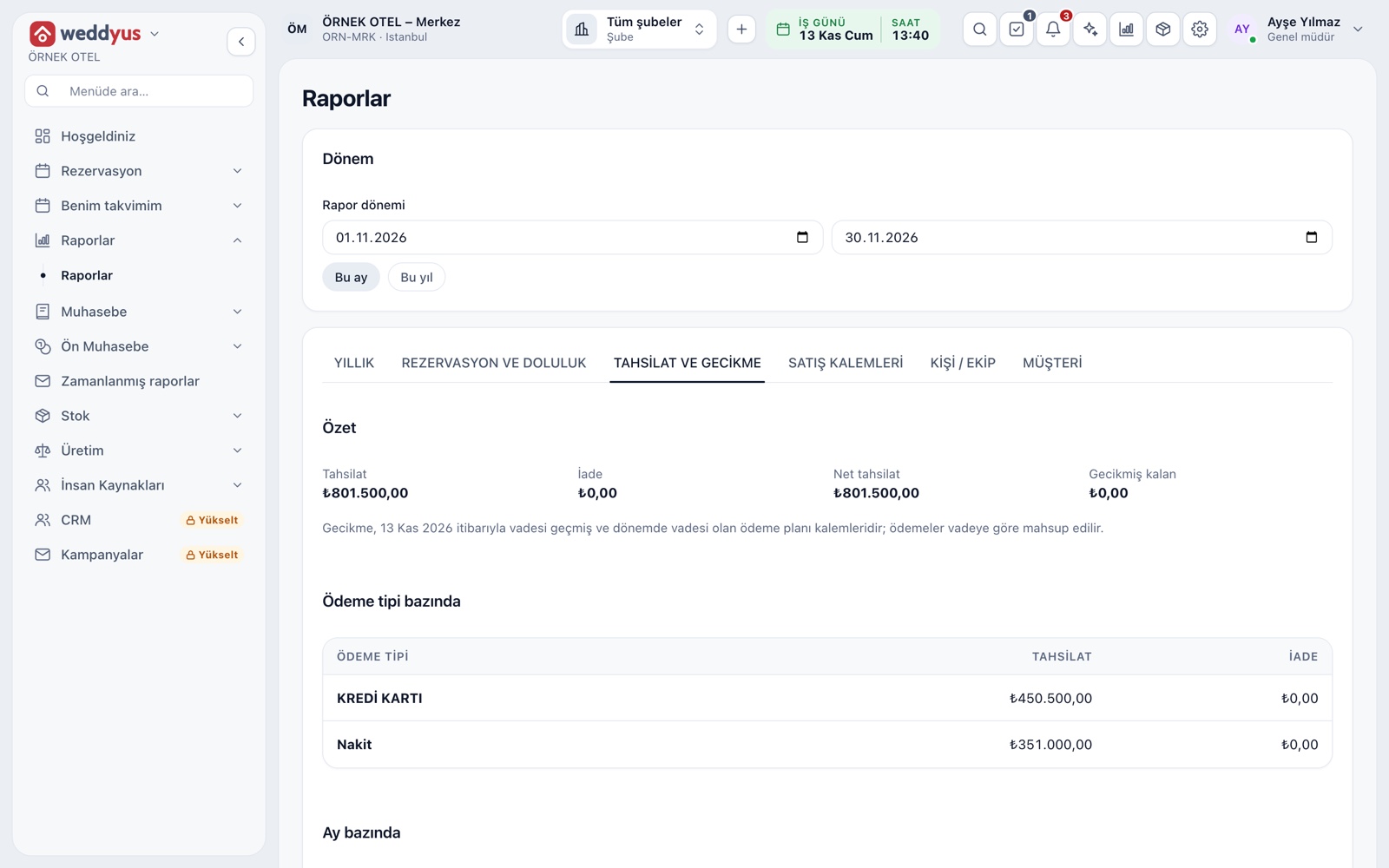
You can set up automatic SMS to the customer when a booking is confirmed, when a payment is received, when a payment is overdue and before a hold expires; the texts are editable. For SMS to go out, your business must define its own SMS provider; without one, no SMS is sent. The link added to the SMS opens a page where the customer sees your notes such as address, parking and program flow. For confirmed bookings, a digital invitation can also be switched on: the customer picks a template, enters their details and sends the invitation to guests, and the business sees only the response totals.
Conclusion
Communication with a couple is less about one great conversation than about doing every promised step on time: calling on the day you said you would, reminding before the hold ends, thanking them when a payment arrives, giving information as the day approaches. You can find how inquiries and customer records are kept on the Leads and Customers page, and the automatic message settings on the SMS and Notifications page.