At a venue, receivables often build up quietly: a remaining balance waits for its due date, items added at the event slip to the next day, and a promise of "we will pay next week" is forgotten. As the delay grows, collection becomes harder and the relationship with the customer becomes strained. The solution is a process that gives every delay the same orderly response: due date, reminder, aging and decision. This guide helps you set that process up. How to design a payment plan is a separate topic; here we focus on what to do after the plan's due date has passed.
Where do receivables arise?
A venue receivable usually comes from one of these sources:
- Remaining balance: Installments and the final payment on the payment plan.
- Items added at the event: More guests, extra services, extended hours.
- Damage charges: Loss identified after the event.
- Post-cancellation difference: The gap between the cancellation charge and the amount received.
Know which record each receivable sits in and on what grounds. A receivable of unclear origin is weak in a collection conversation.
Aging: divide the delay into buckets
Aging means grouping overdue amounts by the number of days late. Each bucket has a different meaning and a different response:
| Bucket | What it usually means | Suggested step | Who handles it |
|---|---|---|---|
| 1-30 days | Forgetfulness or a small hiccup | Polite reminder, an easy way to pay | Sales or front desk |
| 31-60 days | Sign of difficulty or reluctance | Phone call, payment schedule conversation | Sales lead |
| 61-90 days | Serious delay | Written notice, restructuring offer | Venue manager |
| Over 90 days | High collection risk | Legal assessment of options | Management and legal adviser |
The steps matched to each bucket are your business policy. Late-payment interest or compensation can be applied if it is written in the contract; for limits and procedure, consult your legal adviser.
The rhythm of reminders
- Send a polite reminder as the due date approaches; most customers have genuinely forgotten the date.
- Make contact on the first day and within the first week after the due date. Every day of delay makes the next step harder.
- Give every receivable an owner: who called, when, what was said and what was promised should show in the record.
- Write the message without blame: due date, amount, business name and who to contact is enough.
- Include the way to pay: which account or method to use and whom to tell once paid. The customer should not be left wondering where to send it.
- Record verbal promises ("I will transfer it on Friday") as a dated task and check that evening.
How to run an overdue conversation
On the phone the aim is not to win an argument but to get paid. Follow three steps: start by asking about the situation ("Your payment is past due; is something wrong?"); then ask for a clear date and amount; finally, summarize what was agreed in writing the same day. If the customer offers a reason, listen, but do not accept a promise without a date. End the call with a single, checkable commitment: "You will transfer this amount by Friday, correct?" If you need to firm up your tone, state the next step (for example a written notice) calmly and in advance.
Priorities shift as the event nears
The open balances of upcoming events are more urgent than older overdue receivables, because as the event approaches both the team and the kitchen start spending money. The contract should state clearly by which day the remaining payment is due and what happens if it is not made. Clarify with your legal adviser whether those terms are enforceable.
Restructuring and uncollectible receivables
If a customer says plainly that they cannot pay, setting up a new plan is often better than receiving nothing. When restructuring:
- Get the new due dates confirmed in writing.
- Track the old plan items and the new plan together; the date and reason for the change should be visible.
- Do not alter payment records that have been received; if a correction is needed, make it with a refund or a reversing entry.
For a receivable that turns out to be uncollectible, close the event file but keep tracking the debt on the customer account; this keeps your booking reports clean while the receivable is not forgotten. The decision to write off should be taken at management level together with your accountant.
Weekly receivables meeting: a 15-minute agenda
- Payments falling due this week.
- The overdue list, by aging bucket.
- Verbal commitments given and whether they were kept.
- Open balances of upcoming events.
- Items needing a management decision: restructuring, legal action, a write-off proposal.
Four measures are enough to track in the meeting: total overdue amount, number of overdue items, average days late and net collections for the period.
How it looks in software
In weddyus this process relies on the following screens:
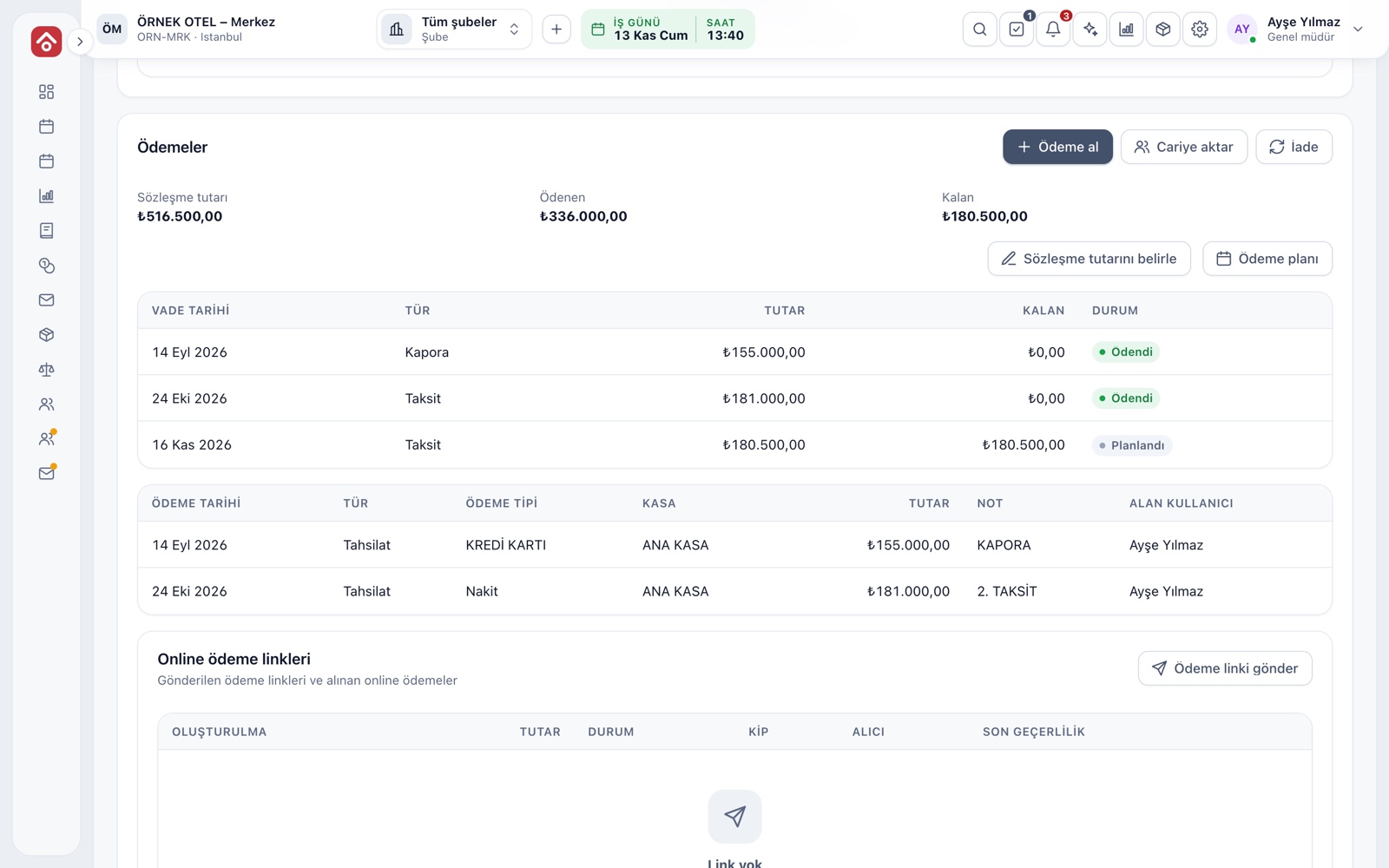
- Payments summary: Overdue, Expected and Unpaid tabs appear with their totals; you go straight from a row to the booking.
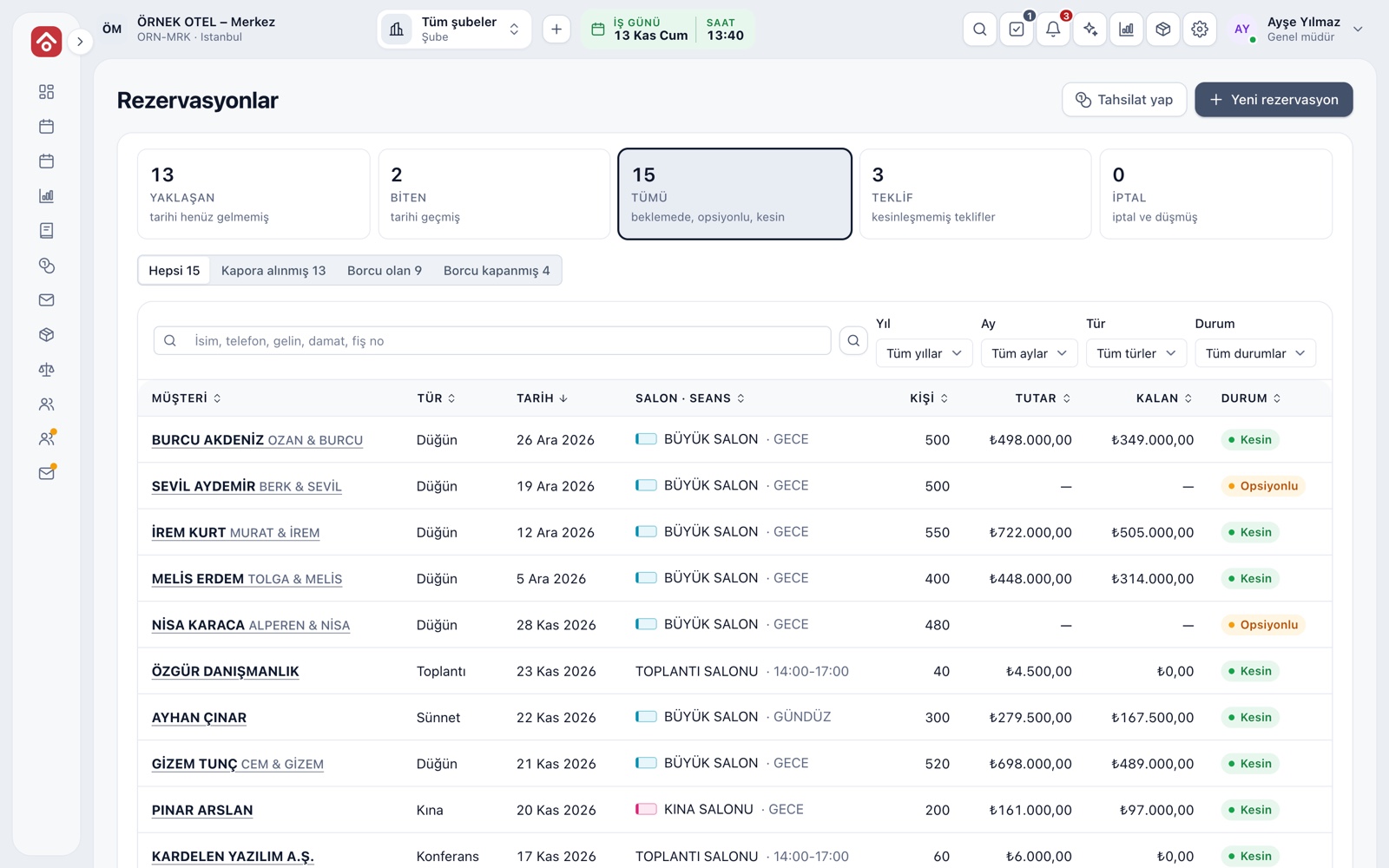
- Booking list: The Amount and Balance columns sit side by side; chips for Deposit received, With balance due and Balance cleared narrow the list.
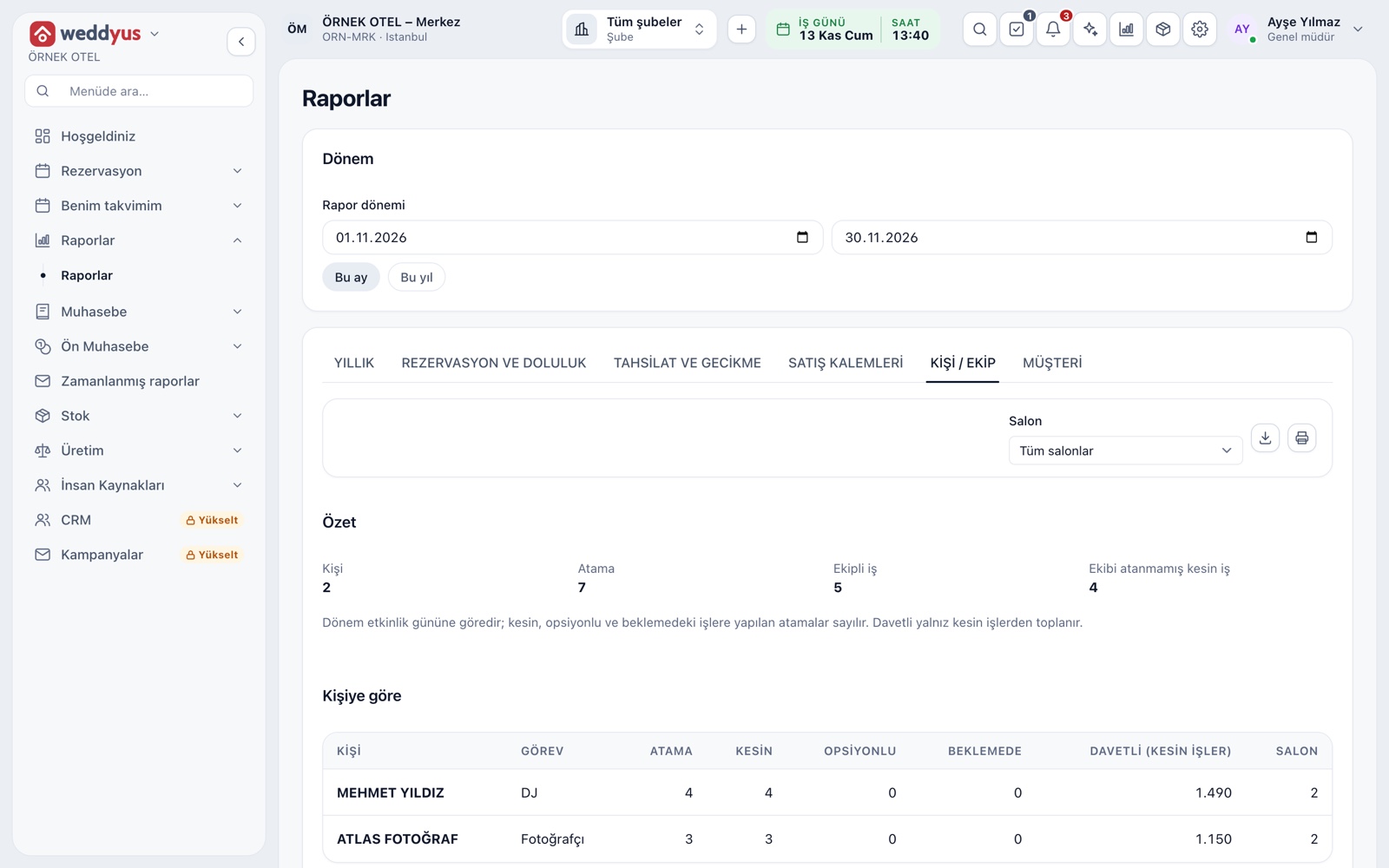
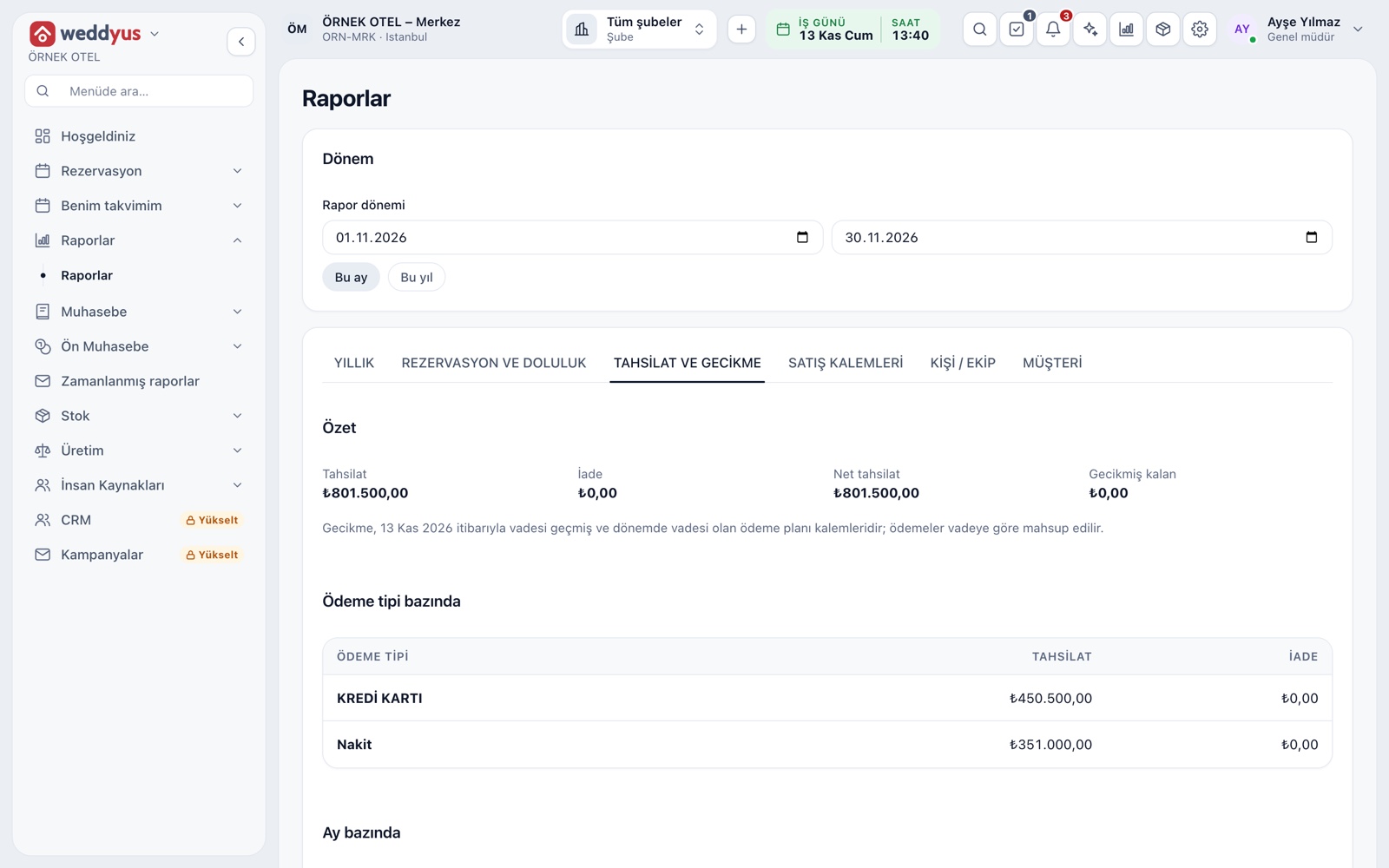
- Collections and overdue report: It gives collections, refunds and net collections for the period and the overdue balance; it splits overdue items into 1-30, 31-60, 61-90 and over 90 days and lists the days late for each item.
- Allocation rule: Partial payments are applied to the oldest item first, in due-date order.
- Automatic SMS: An SMS is sent once to the customer for an overdue plan item; this requires your business to set up its own SMS provider.
- Transfer to account: An uncollectible amount is taken off the booking balance and recorded as a debit on the chosen customer account; no payment or cash movement is created.
Conclusion
Managing receivables is not about arguing with customers one by one; it is an order that answers every delay with the same speed and the same tone. Remind about the due date, divide delays into buckets, take decisions up to management level and record every step. For details of the receivable screens and reports, see the Receivables and Overdue Tracking page.