A quote is a sales document; a contract is a protection document. They are not the same thing and are not prepared with the same care: a quote should be fast, clear and one page long, while a contract should be complete enough that both parties can rely on it without argument when the day comes. Below you will find the habit of quoting on the same day, ten clauses a venue contract should cover, and the six most common mistakes.
The difference between a quote and a contract
| Quote | Contract | |
|---|---|---|
| Purpose | Give the customer the information to decide | Put each party's rights and obligations in writing |
| When | The day the customer first asks | Once the decision is made, when the deposit is taken |
| Effect on the calendar | Does not hold the date | The date becomes firm |
| Language | Short, plain, with numbers | Detailed, reviewed from a legal point of view |
Same-day quote: five items are enough
When a customer asks for a price by phone or in the venue, you should be able to give these five items in writing before the conversation ends:
- Date, venue and session or time range.
- Guest count: the expected number and the guaranteed number, separately.
- Scope: what is included and what is excluded, such as food, drinks, decor, sound and lighting, valet and cleaning.
- Price: per person or total, with or without VAT, and for how long it is valid.
- Next step: what is needed to place a hold on the date and how long the hold lasts.
Offering options instead of a single figure also helps: for example two packages, weekday daytime and Saturday evening. Once the customer picks one, the bargaining is about what the package contains rather than the price.
A quote like this is not a contract, but it is the document the customer will hold while talking it over with a partner or family that evening. A customer who tours the venue alone will ask for it on the next visit. The channel you send it through (message, email, PDF) matters less than the validity period written on it. A quote without an expiry turns into a "you gave me that price" argument when prices change next season.
Ten clauses a contract should cover
- Parties: the name or legal name and contact details of the business and the customer.
- Event: date, venue, session, start and end time, setup and teardown times.
- Scope: included services and anything explicitly excluded.
- Guest count: guaranteed number, rules for increases and decreases, last notification date.
- Price and payment plan: total, VAT status, deposit, installments and the final payment day.
- Cancellation: tiered schedule, refund terms, the consequence of a change of date.
- Outside suppliers: arrival time, loading point, venue rules they must follow.
- Venue rules: music and sound curfew, decor restrictions, whether outside food and drink may be brought in.
- Damage and liability: how damage to the venue and equipment is assessed and covered.
- Force majeure and disputes: each party's obligations in extraordinary circumstances and the route to follow in a dispute.
Have your legal adviser draft the wording of these clauses, especially cancellation, liability and disputes. The list above is not contract text; it is a checklist of the headings that should not be missing.
Before signing, read the payment plan, guest count and cancellation clauses aloud with the customer. That half hour of investment prevents the "I did not know that" argument weeks after the event. Note the questions that come up while reading; if the same question comes up three times, that clause needs to be rewritten.
The six most common mistakes
| Mistake | Result | Fix |
|---|---|---|
| VAT inclusive or exclusive not stated | The final invoice surprises the customer | State "VAT included" or "VAT excluded" next to the price |
| Verbal promises (such as free decor) | Disputes with no evidence | Either add them to the contract or do not promise them |
| Guest count rule unclear | A price argument in the last week | Write the guarantee and the increase rule |
| Cancellation terms explained at signing | The customer objects and the process drags | Share the terms at the quote stage |
| Outdated template | Old dates, old rules | Review the template at the start of each season |
| Signed copy goes missing | No document to produce in a dispute | Attach the signed copy to the booking file |
Connect the process into one flow
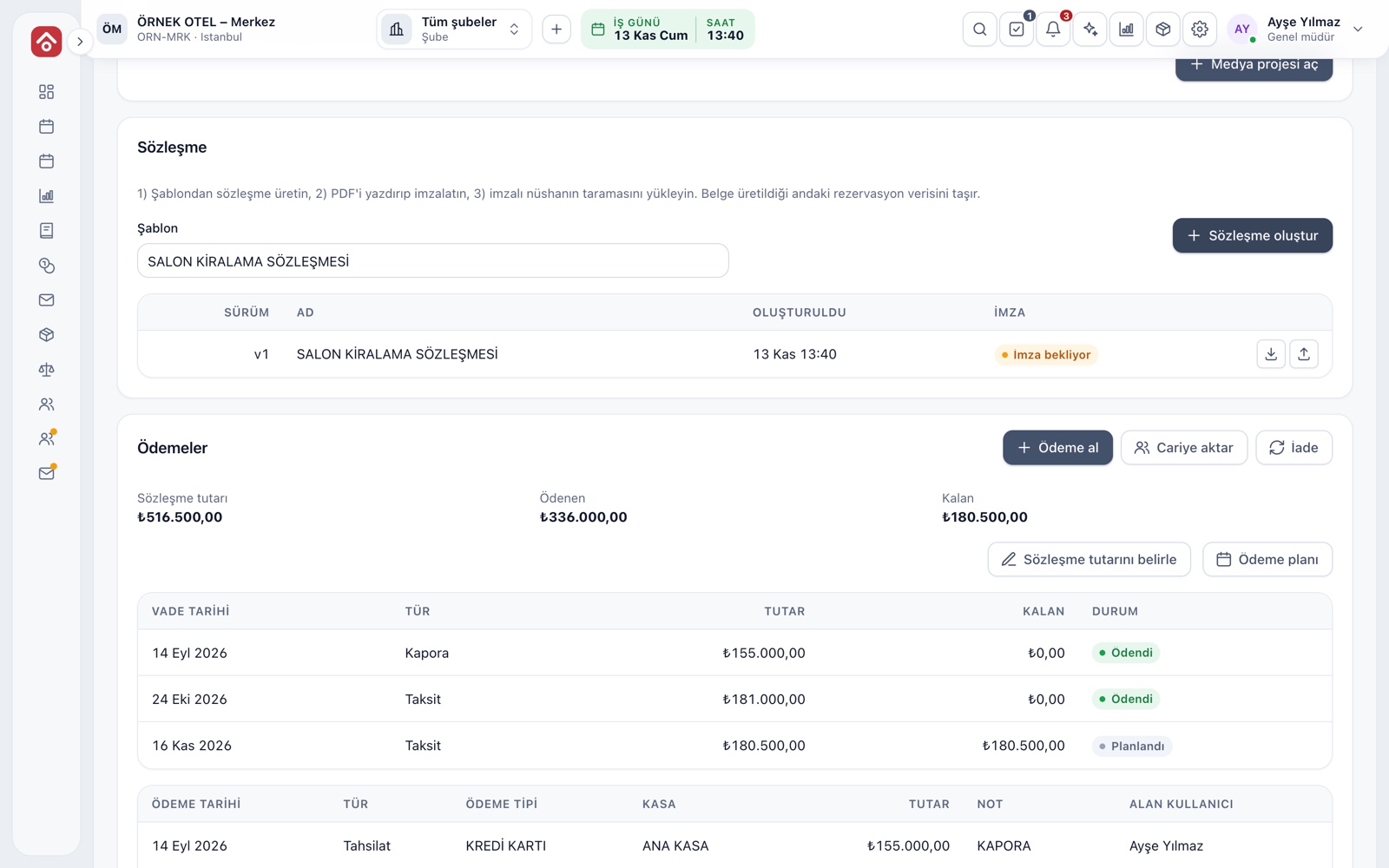
A healthy flow looks like this: same-day quote, a hold if needed, a contract once the decision is made, and a confirmed booking on the calendar when the deposit is received. The contract output should carry the booking data as it was when it was produced; if the template changes later, the text of an earlier contract must not change. The signed copy should be scanned and attached to the booking file, and who uploaded it and when should stay in the record. A few days before a hold expires, call the customer and send the draft contract; it helps the decision happen before the deadline. Let them read the draft before signing: a contract read for the first time at the signing table produces suspicion, not trust.
How it works in software
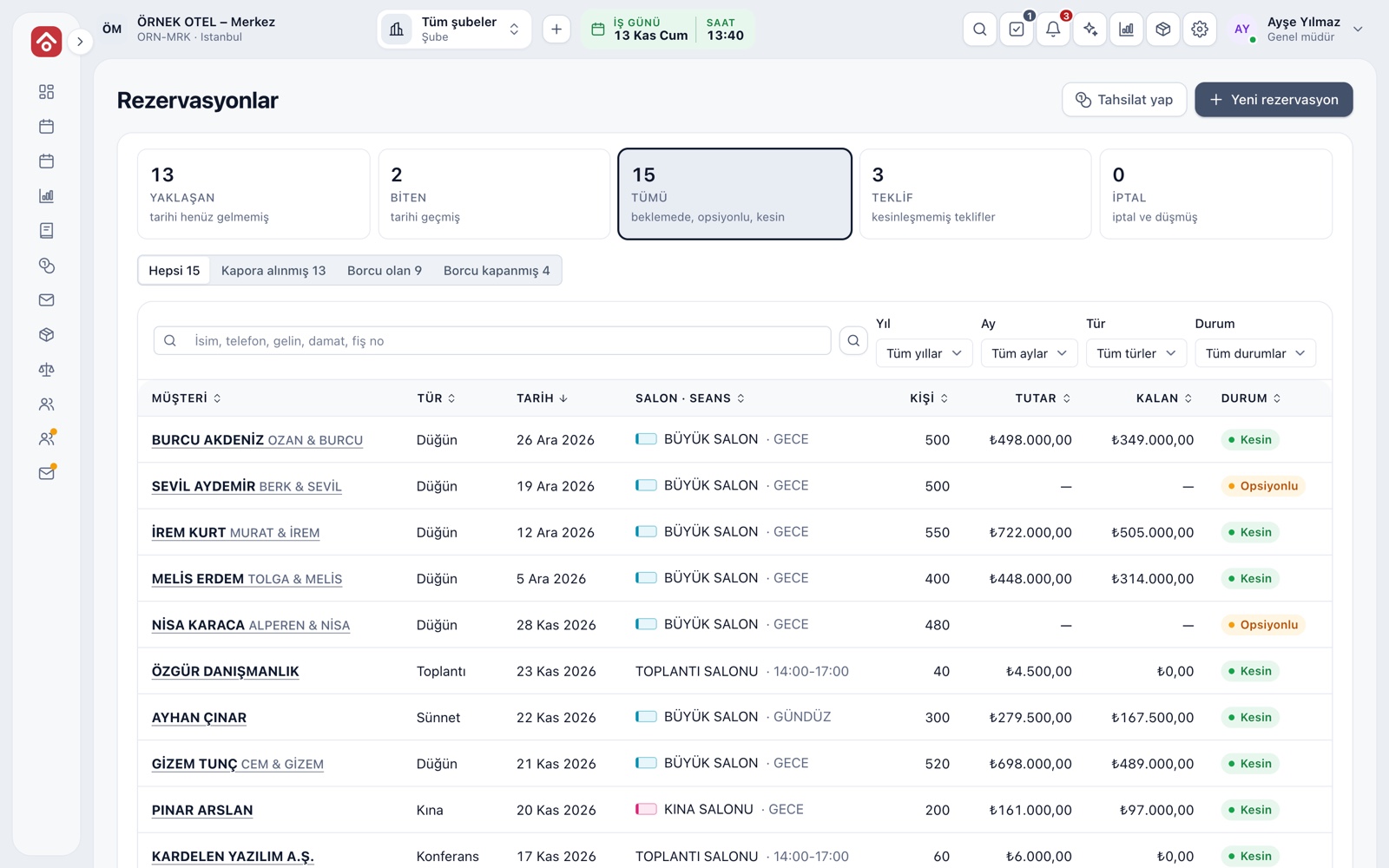
In weddyus a booking in the quote status does not hold the venue; for the price you pick a venue package (named prices with date ranges, such as weekday daytime or summer season) or enter a manual price. If the package price changes later, the amount on the existing booking is kept. Contract templates come in two types (venue rental and service); placeholders in the text, such as customer name, date, total, payment plan and cancellation table, are filled from the booking. The tiered cancellation schedule is tied to the template. The document is produced as a PDF, the signed copy is uploaded as a file of up to 10 MB, and the signature status is visible. The template texts supplied at first launch are samples; have them reviewed by legal counsel and adapt them to your business before use. The flow runs through PDF, wet-ink signature and a scanned copy.
Conclusion
A good quote makes deciding easy, and a good contract protects everyone after the decision. Quoting quickly and writing the terms clearly are not opposites; both are part of the same discipline. For details of the quote and contract flow, see the Quotes and Contracts page.