Menu, equipment and staffing plans look like three separate jobs, yet all three derive from the same number: the guest count. If the number is wrong, the kitchen over- or under-produces, there are not enough tables and chairs, and the service team is either idle or overwhelmed. That is why the first step of planning is managing the guest count well; the rest is arithmetic. Below we take the three calculations in turn, in a way that fits day-to-day practice.
The guest count: three numbers, three meanings
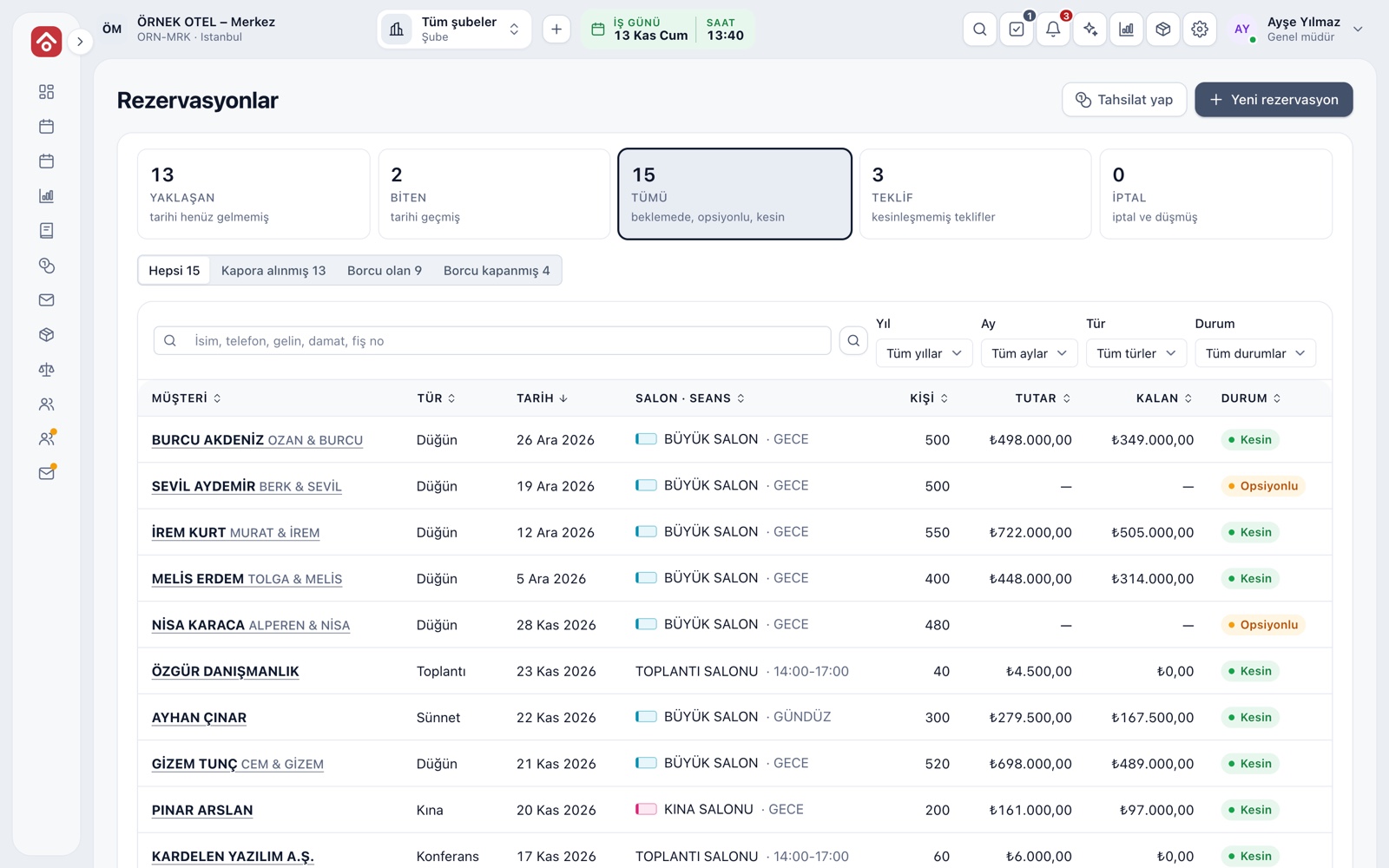
"How many guests are coming?" does not have a single answer:
| Number | When it is known | What it determines |
|---|---|---|
| Expected | At the time of the contract | Room layout, first price |
| Guaranteed | In the contract or at the final notification date | Minimum billing, kitchen production |
| Actual | On the event day | Increases, extra service, final bill |
Write these into the contract: by what date the guaranteed number must be given, whether reductions are accepted after that date, how increases are charged, and what billing is based on (the higher of guaranteed and actual, the guaranteed number only, or the actual number). This choice changes the price directly, so the customer should know it at the quote stage.
Menu planning
- Package structure: Keep fixed packages and optional extras under the same names from quote to contract. The customer should not see two different names in two different documents.
- Dietary needs and allergies: Get the information from the customer in writing, pass it to the kitchen and service lead before the event, and mark it by table during service. Most events have guests with special diets; learn the proportion from your own past events.
- Last-change date: Set a cut-off for menu changes; the kitchen's purchasing calendar depends on it.
- Tasting and approval: If the couple approves the menu by tasting it, record the approval and any changes in writing; the "this is not what we discussed" objection on the event day largely originates here.
- Refreshments and products: Calculate items such as drinks, cake and boxed products by ratio: "Y units per X guests". For example, with 600 guests and 1 case of water per 100 guests you need 6 cases. If it is 3 pieces per guest and a case holds 24, then 600 × 3 = 1,800 pieces, which is 1,800 ÷ 24 = 75 cases. Decide in advance whether a fractional result is rounded up; rounding up prevents shortages but increases waste.
Equipment planning
Split equipment into two groups: items tied to the guest count, and fixed items.
- Tied to guest count: tables, chairs, linens, plates, cutlery, glasses. Add a reasonable reserve above the expected number.
- Fixed: sound system, microphones, lighting, stage, screen, climate control, generator or backup power.
Test sound and lighting before every event; keep a spare microphone, batteries and cables ready. If you use rented equipment, confirm the delivery time, the time left before setup and the return terms in writing in advance. The maintenance schedule and inventory count of your equipment are part of the same discipline.
Staff planning
There is no magic ratio to copy for staffing; it varies with your layout, the service style (seated dinner, buffet, cocktail) and the experience of the team. So derive the ratio from your own history: at which events did you serve guests smoothly with how many service staff, and at which did you fall behind? If you keep notes by event, after a few events you will see your own ratio. After each event, briefly note the moments when the team could not keep up or stood idle; these notes are the most reliable source for the next shift plan.
- Plan roles separately: service, kitchen, bar, technical, welcome and security, cleaning.
- Treat the setup and teardown crew as separate shifts from the event hours.
- When the service style changes (for example from seated dinner to cocktail), redo the calculation.
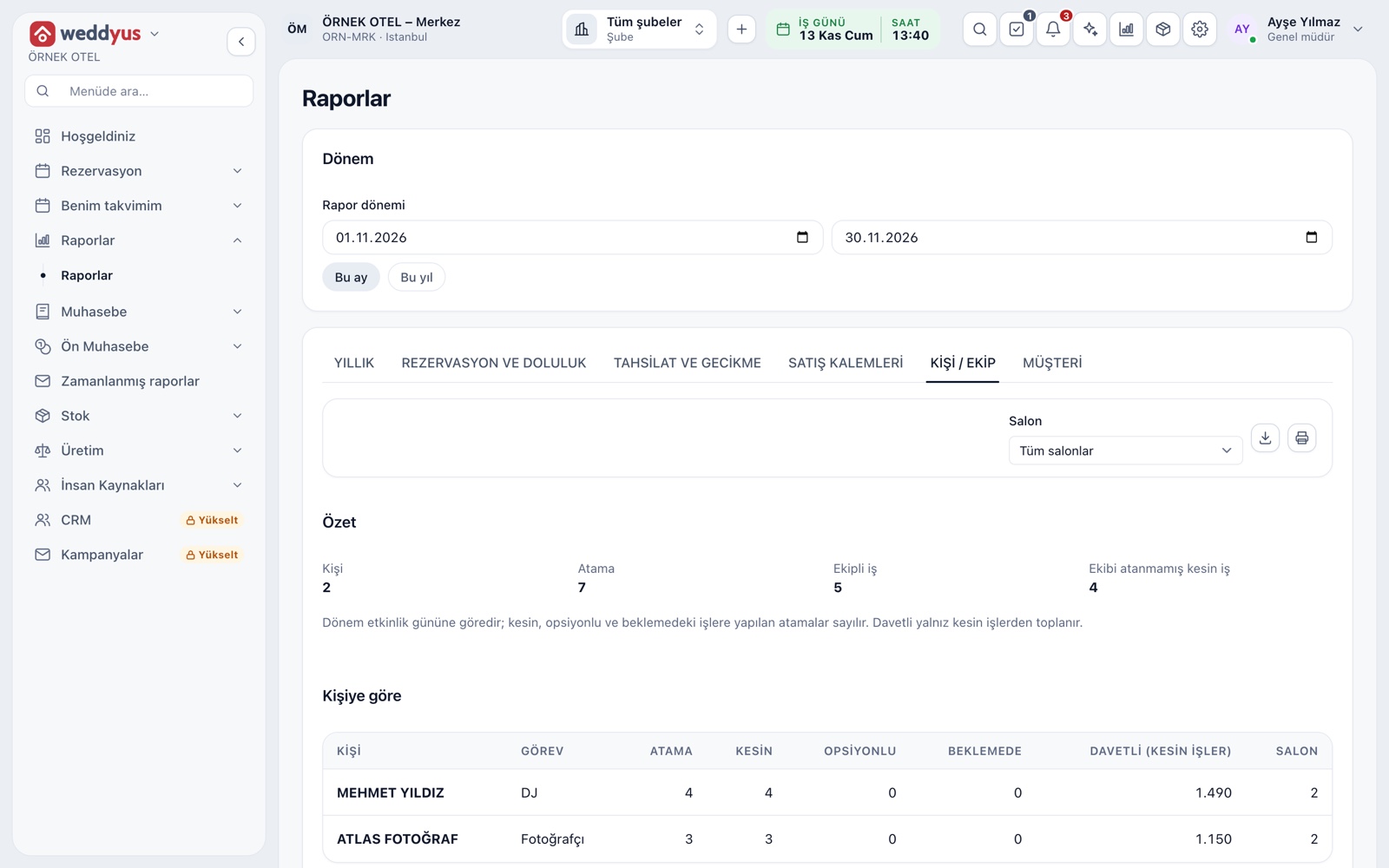
- Record outside suppliers (photographer, music, decor) at contract time with their role, arrival time and contact details.
Put the three calculations in one table
| Resource | Input to the calculation | When it is final | Main risk |
|---|---|---|---|
| Kitchen and menu | Guaranteed guest count, dietary needs | At the final notification date | Over- or under-production |
| Drinks and products | Guest count and ratio | At the final notification date | Shortage, waste |
| Tables, chairs, service equipment | Expected number plus reserve | About a week before the event | Not enough |
| Sound, lighting, technical | Program flow | Once the program is settled | Failure |
| Staff | Guest count, service style | After the final notification | Too few or too many shifts |
| Outside suppliers | Contract | At contract time | Arriving late |
How software can support it
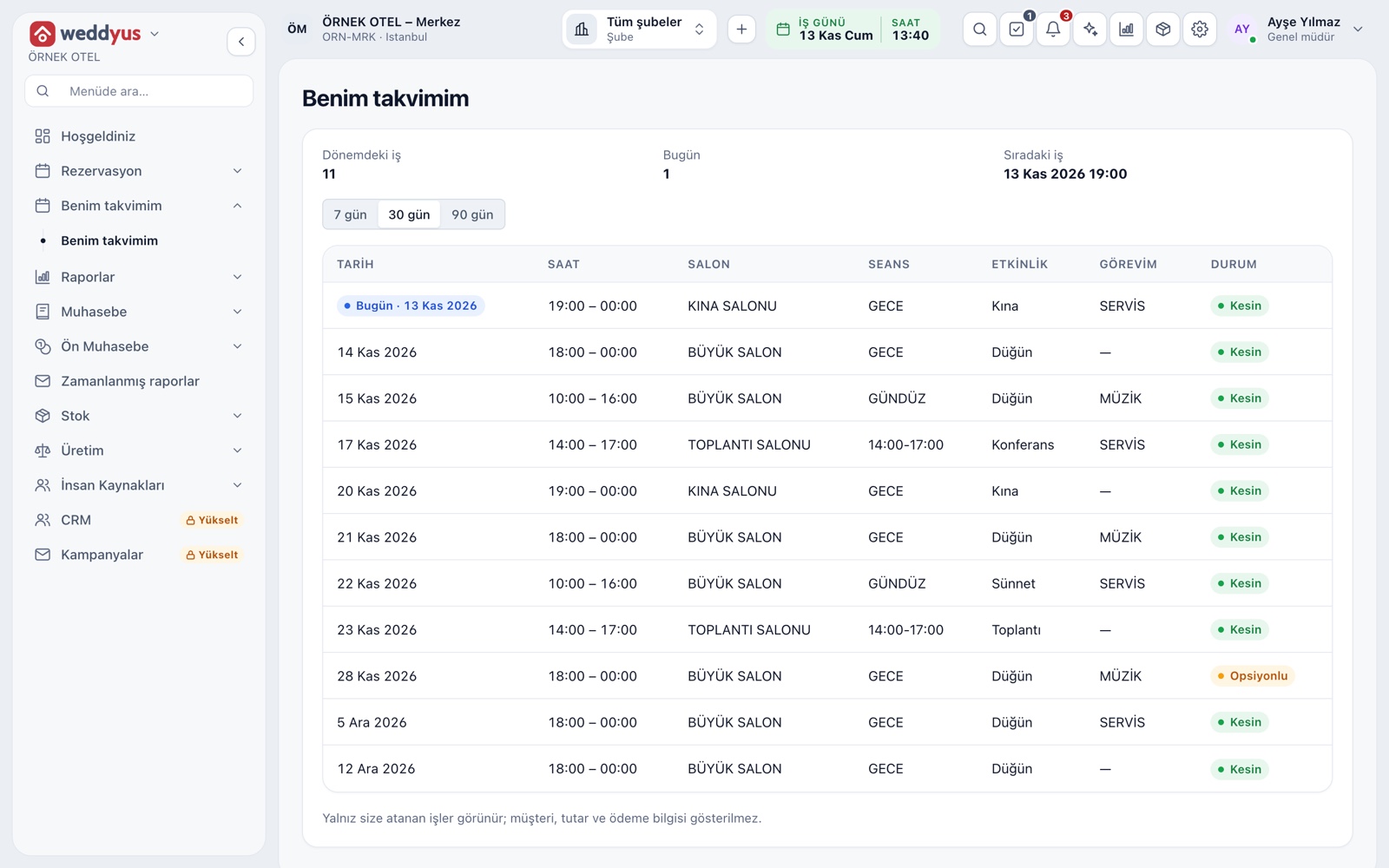
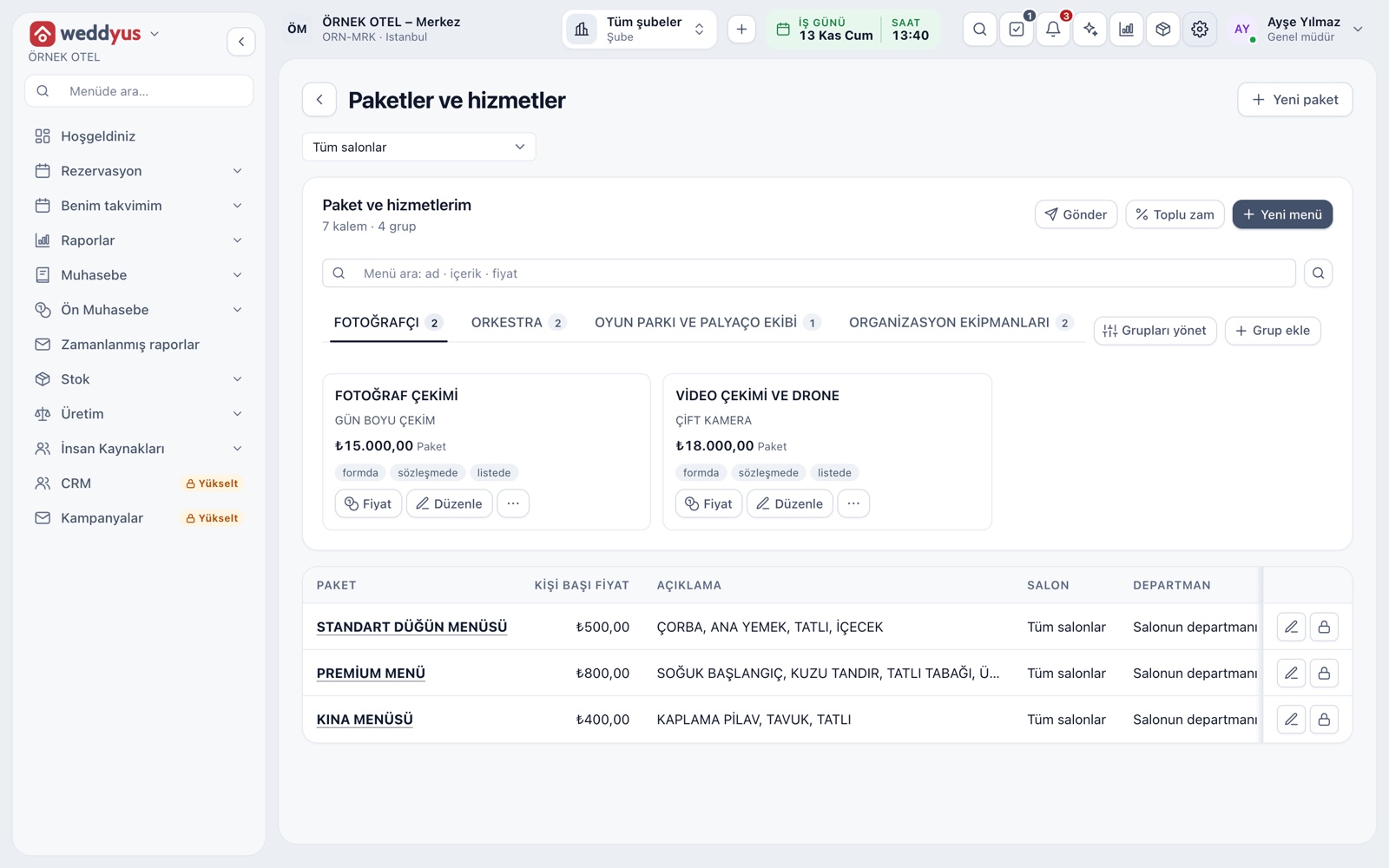
In weddyus the "Packages and services" catalog holds items with groups and units (piece, package, hour, per guest, day, lump sum and so on), and for each item you choose whether it appears on the form, in the contract and on the customer price list. Products carry the ratio logic above: "Y units per X guests", pieces per case and the rounding method are defined, and entering the guest count calculates quantity and price. If a product is linked to a stock card, the line on a confirmed booking is deducted from the venue's mapped warehouse on the event day; without a warehouse mapping, no deduction is made. The billable guest count rule (the higher of guaranteed and actual, guaranteed only, or actual) is chosen in the settings. Services such as sound and lighting, photography or an orchestra can be kept as fixed-price items. The price list is sent as WhatsApp text or PDF; a bulk price increase is applied by percentage and rounding and can be undone within a short time. Outside suppliers are assigned on the booking with a role. For an equipment inventory and maintenance tracking, you still need a separate record-keeping method.
Conclusion
The common root of the three plans is the guest count: manage it, and the kitchen, room layout and service team all work from the same number. Derive your ratios from your own history, write the cut-off dates into the contract, and keep the details in the catalog. For the details of the catalog and package setup, see Packages and Menu Planning and Equipment and Extra Services.