In the venue business, revenue is committed months before the event, while the money often arrives close to the date. Two tools manage that gap: the deposit that secures the date, and the payment plan that spreads the amount over time. If either is set up loosely, the venue puts both the date and the money at risk. Below you will find how to structure the plan, how to keep collections orderly, and how to make the cancellation calculation transparent.
What is a deposit for?
A deposit is the tangible price of holding a date. For the customer it signals a serious decision; for the venue it offsets part of the sales opportunity lost if the booking is cancelled. There is no fixed industry rule for the amount or percentage; it depends on your business policy and your contract. The legal nature of a deposit (an advance payment or a cancellation fee) and its refund terms also depend on how the contract is worded, so have your legal adviser review the text before you use it.
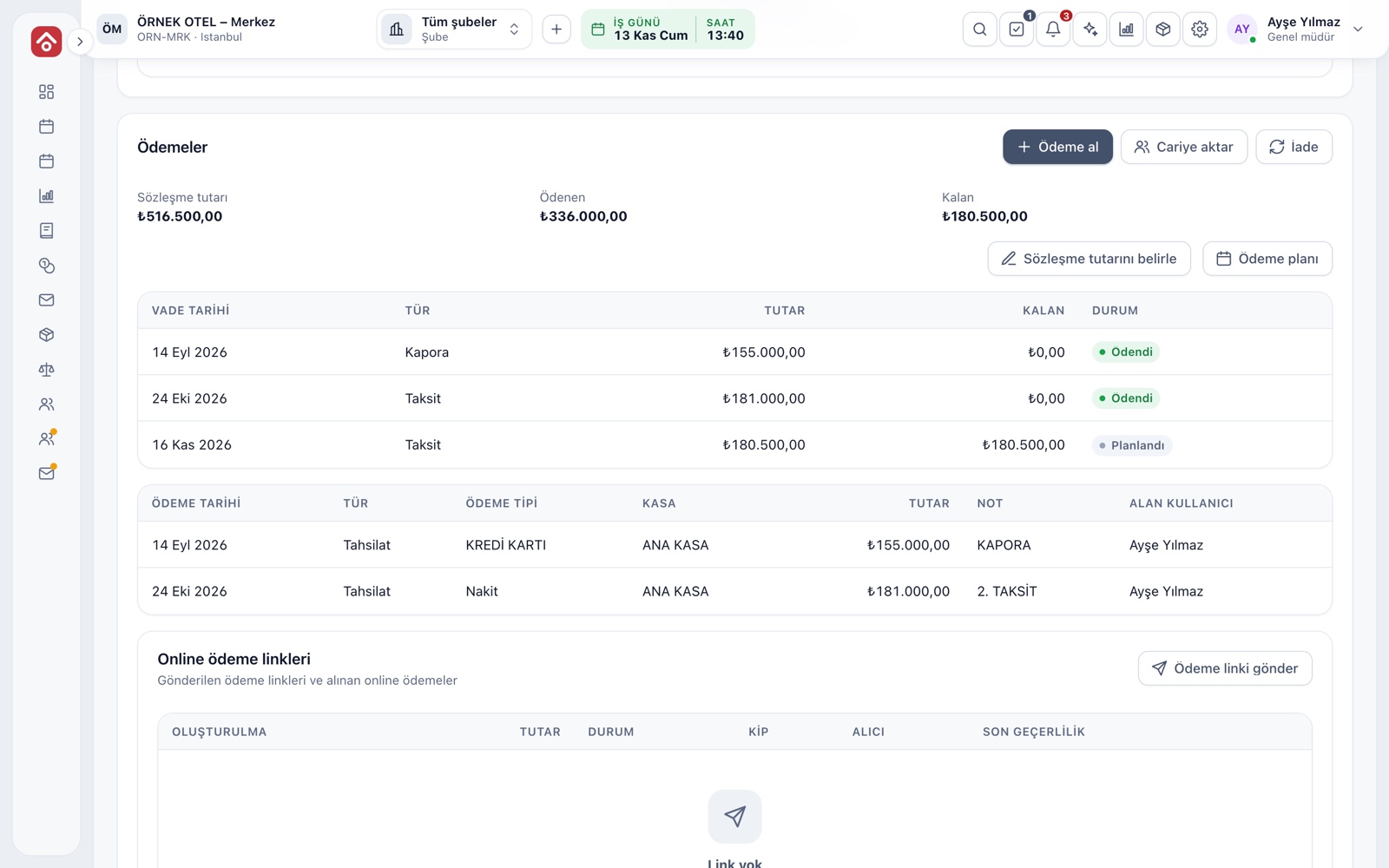
The skeleton of a payment plan
At most venues the plan has four parts:
| Stage | When | Purpose | Watch out for |
|---|---|---|---|
| Deposit | When the date is secured or the option is confirmed | Locks the date | Amount and refund terms written in the contract |
| Installments | At regular intervals until the event | Spreads the burden | Each due date and amount written individually |
| Final payment | A number of days before the event, as stated in the contract | Clears the balance before the event | Fix the amount once the guest count is final |
| Post-event items | After the event | Extra services, added guests, damage | Agreed in advance, itemized |
Five rules for building the plan
- Fix the contract total first. The plan cannot exceed the contract total, and the total cannot be lower than what has already been paid.
- Tie due dates to the calendar. A fixed day such as "the 15th of each month" is easy for the customer and the team to remember.
- Write down the guest count rule. What is the guaranteed number, and how are increases and decreases handled? Will you bill the higher of guaranteed and actual guests, or the guaranteed number only? This choice changes the total directly.
- Record discounts with a reason and a date. If bargaining, early payment, season and promotion are kept apart, you can later see which discounts actually worked. A verbal discount is an unrecorded discount.
- Do not edit a payment record; correct it. A payment that has been received is not deleted afterwards; a mistake is fixed with a refund or a reversing entry. This principle protects both the team and the customer.
How to explain the plan to the customer
Discuss the payment plan at the quote stage, not at the signing table. The customer should see the total, the deposit date, each installment's due date and what happens on cancellation as a written summary. Be especially clear on three points: under what conditions the deposit is not refunded, how a change of date affects the plan, and by when a change in guest numbers must be notified. Also answer in advance whether a change of date counts as a cancellation and whether the deposit carries over to the new date. A customer who learns the terms at the moment of signing objects and delays the decision; a customer who learns them at the quote stage makes a decision.
Discipline at the moment of collection
A plan is strong on paper; the real work starts when money changes hands:
- For each payment, record the amount, payment method (cash, bank transfer, card), date, time and the person who received it.
- Give the customer a receipt every time, and apply partial payments to the oldest due item first.
- Make the remaining balance visible to the customer after each payment: one sentence saying "after this payment the balance is X" prevents most later disputes.
- Record which cashbox each payment went into.
- At the end of the day, compare the cash count with the records; if there is a difference, investigate it the same day.
- You can define different plans by season: a tighter deposit and due-date schedule in peak periods and a more flexible one in quiet periods helps you fill dates. Define the plans in advance so the team offers everyone the same thing.
Cancellation: who keeps the deposit?
When a cancellation comes up, the calculation should be visible at a glance. The common method is a tiered cancellation schedule: the closer the event, the larger the share of the contract value that is retained. You set the day counts and percentages; we give no sample figures here because they depend on your business, your season and legal advice. A good cancellation calculation answers these questions on one screen:
- How much has the customer actually paid, net, so far?
- What is the cancellation charge under the tiered schedule?
- What is the maximum amount that can be refunded?
- Will the retained amount be recorded as a service fee or as compensation?
Accounting and tax note
In accounting, a deposit is usually tracked as an advance received before the service is delivered, and it turns into revenue when the event takes place. When an invoice must be issued, when VAT becomes due and how a retained cancellation fee is treated for tax purposes depend on the legislation, so check the current rules with your accountant.
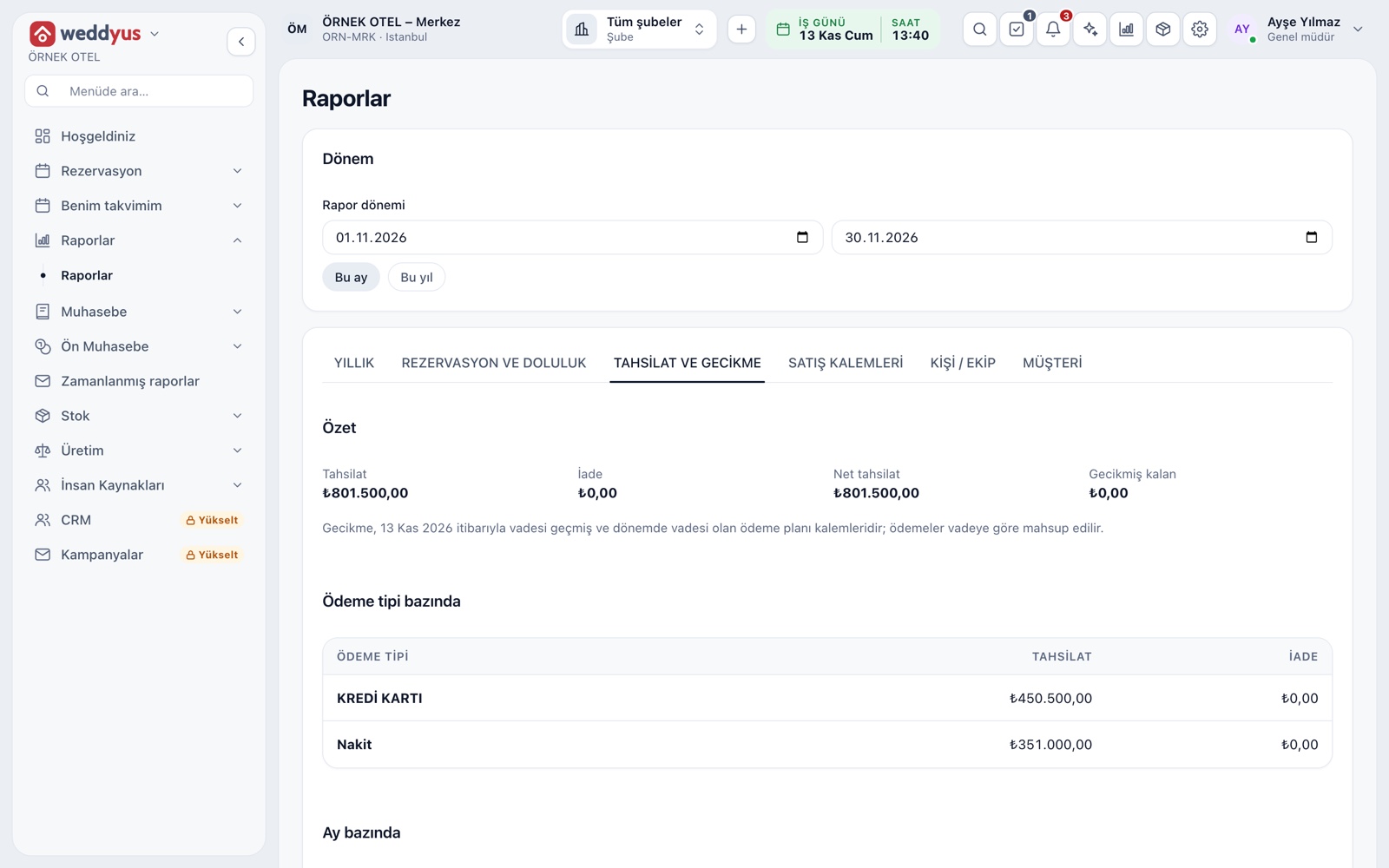
In weddyus, deposits are tracked as advances without an invoice. After the event, revenue and VAT are recorded, the final invoice appears on the "to be invoiced" list and the deposits received are offset against it. The nature of a retained cancellation fee (service fee or compensation) can be chosen per transaction in the cancellation settlement; confirm with your accountant which one applies.
Weekly payment checklist
- Remind customers of payments falling due this week.
- List overdue items separately and put them in the call queue.
- Call options that are waiting for a deposit before they expire.
- On confirmed events, verify that the plan total matches the contract total.
- For events coming up soon, confirm the remaining balance and the guest count.
Conclusion
A good deposit and payment plan does three things together: it locks the date, makes collections predictable, and gives a cancellation calculation nobody is surprised by. All of it should be written in the contract and appear identically in the record. You can see how the weddyus deposit and installment flow works on the Deposits and Installment Collection page.